FOOD FOR THOUGHT · WEDNESDAY 25 NOVEMBER 2026
FRANKENECO
Stop Teaching Answers. Start Making Trouble.
Our first suspect: what makes a brilliant economist?
01 / THE MYTHTHE CLASS BUILDS IT
THE MONSTER LAB

Build the perfect economist.

Pick the ONE superpower a proper economist cannot do without.

First build the expert everyone admires. Then find out what employers really think.

VOTE: WHICH SUPERPOWER WINS?

Enter hand counts directly, or use +/−. Every vote changes the creature.
THE MYTH / UNDER CONSTRUCTION
THE CREATURE
Your votes have built an impressive economist. Can it survive the employer evidence?
02 / THE BUILDCLASS VOTES → DNA
FICTIONAL CAPABILITIES / FOUR TRAITS

Meet your economist.

All four skills start at an assumed 75/100. Class votes boost each one: breadth matters. Our economist is fictional.
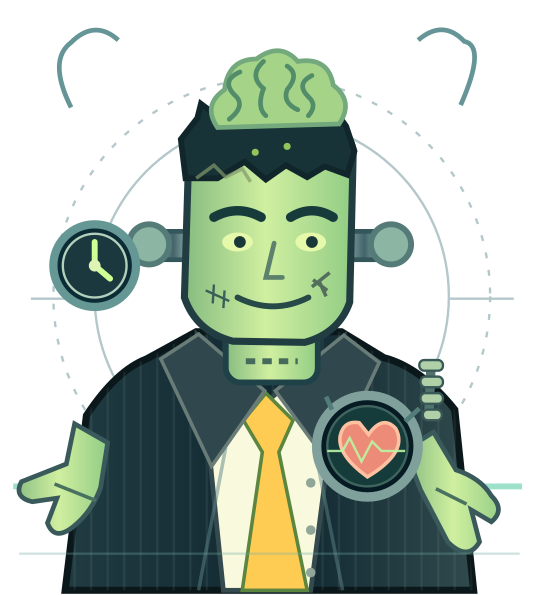
SPECIMEN ECO–001 / OPERATIONAL● ALIVE
Frankenstein economist, showing head, brain, heart and suit
PROFESSOR FORMULAOne imaginary economist. Four real employer priorities to come.
TEST ONE / ECONOMICS NETWORK 2019
MONSTER INDEX
First the applause. Then the uncomfortable evidence.
Eight findings. One index. Watch the same creature rise and fall.
03 / THE AUDITUP → DOWN
FILE A / THE CASE FOR THE MONSTER
SKILLS RATED “VERY IMPORTANT” · percentage of employers surveyed
ONE REAL GRADUATE STRENGTH: 97% rated graduates high/very high at analysing data. EN, p. 4.
ONE ANIMATED TEACHING INDEX

MONSTER INDEX

0/100
CASE FILE SEALED
OPEN THE EVIDENCE
File A shows what employers value. File B shows where graduate skills were rated less highly.
Illustrative index, not a graduate success rate.
Economics Network survey (2019), pp. 3–5
FILE B / WHAT STILL NEEDS DEVELOPING
GRADUATE SKILLS RATED “NOT VERY HIGH” · percentage of employers surveyed
THE QUESTION FOR US: Are we assessing applied judgement, or a familiar answer?
TEST TWO / AI DISPLACEMENT + OUR RESEARCH
MONSTER INDEX
Same economist. New AI environment.
What must students still learn to do for themselves?
04 / THE AI SHOCKTHE SECOND INDEX TEST
THE SAME MONSTER
Frankenstein economist with brain, neck and body fully visible
Our fictional economist hasn't changed.
AI changes the teaching question.
LIVE MONSTER INDEX
—/100
EMPLOYER TEST —AI SHIFT —
Start with the Monster Index. Then test AI.
TECHNICAL SHIFT → CAPABILITY → TEACHING

AI can finish the task. Did the student learn?

Change the work. Test the learning.

WHO DOES THE THINKING?
0 / 3 tests opened
OPEN THE FIRST RESEARCH FILETEST → TEACHING

An impressive score. But what happens when AI arrives?

The employer test established the skills. The second test asks what changes when AI can produce more of the routine work.

FIRST, EXAMINE THE RESEARCHOpen Displacement and decide how much routine technical work AI could perform.
WHAT STUDENT-LED AI LOOKS LIKELet AI assist. Keep the student thinking.

AI can deliver the answer. This experiment asks whether the student still practises the economic thinking that produces and challenges it.

CURRENT FILE: NOT YET TESTEDAll score changes are explicitly hypothetical teaching assumptions. The papers support the risks and possible responses, not the size of the adjustments.
TWO SHOCKS / ONE PEDAGOGICAL RESPONSE
STOP TEACHING ANSWERS.
START MAKING TROUBLE.
Keep the knowledge. Change the task: students must test what they are told.
05 / THE RESPONSETHE TEACHING CASE
THE EMPLOYER PROBLEM / KNOWING IS NOT USING

STOP TEACHING ANSWERS.

A correct answer may show that a student can follow a worked route. It does not always show that they can recognise when the route stops working.

TEACHING MOVE: Begin with a believable claim. Students commit to a view, defend it, encounter evidence that challenges it, then use economics to build a more defensible explanation.

THE CHANGE: Teach concepts when students need them to investigate a contradiction, not just to repeat a worked answer.
THE AI PROBLEM / OUTPUT IS NOT UNDERSTANDING

START MAKING TROUBLE.

Our Capabilities research warns that better AI-assisted coursework need not mean stronger adaptability. Our Scaffolding research shows why students must lead the learning process rather than rely on AI to do it for them.

ASSESSMENT MOVE: The AI Skills ePortfolio makes students show their decisions: what they questioned, which evidence mattered, what changed and why their verdict survives.

THE CHANGE: Reward the quality of students’ explanations, challenges and justified revisions—not only the final output.
THE TITLE IS THE METHOD:  Keep technical expertise. But make students use it to challenge claims, lead AI and defend a stronger explanation.
LEFT / WHY THIS PEDAGOGY?01 / 06

Begin with a disputed claim.

Students first commit; the lecturer does not hand them the verdict.
WHAT MAKES THIS DIFFERENT?The first answer belongs to the students, not the lecturer.
LEARNING PURPOSEMake initial judgement visible and revisable.
RIGHT / FINANCE INVESTIGATIONBANK PROFITS / FINANCIAL RESILIENCE

High profits mean a safe bank. Do they?

The bank reports rising profits. That sounds like evidence it is doing well. Is it enough to establish safety?
GENIALLY / WHAT STUDENTS DOVote: Do higher profits prove that a bank is safer?
THE INVESTIGATIVE TURNA popular explanation goes on trial.
ONE CLAIM · SIX TESTS. Students start with a belief and finish with a defensible explanation.
THE NEW ASSESSMENT / NOT JUST A BETTER PROMPT

Make the learning visible.

From our research: a polished AI-assisted result may conceal how well a student could adapt independently. AI can support thinking, but submitting its answer cannot establish that the student learned to reason.

Student’s job: Across weekly tasks, use AI to generate or challenge explanations, test evidence and alternatives, and explain what you accepted, rejected or revised.

Same educational purpose, two sister modules: CEA investigates economic claims; CFA investigates financial claims. Both require the student to show the reasoning AI cannot simply certify for them.
WHAT THE AI SKILLS ePORTFOLIO MAKES VISIBLE

Show me the thinking.

1
COMMITState an initial economic claim or prediction before using AI.
2
CONFRONTCheck sources, compare explanations and test whether the AI argument holds.
3
RECONSTRUCTRevise the economic explanation when the evidence changes.
4
ACCOUNTExplain the decisions and revisions. Assess commitment, method, judgement and communication.